
The Hidden Visual Demands of First Grade Vision
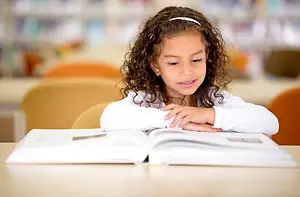
First grade can feel like someone quietly turned up the speed. Books have more words. Writing takes more time. Teachers expect children to follow lessons across the room, work independently at their desks, and move from one visual task to another throughout the day.
Behind all that learning sits a surprisingly busy visual system.
First grade vision involves much more than seeing letters on an eye chart. Children use focusing, tracking, eye teaming, hand-eye coordination, and other visual skills to follow a line of text, copy from the board, write on a page, and keep their place while reading.
At Miamisburg Vision Care, our pediatric eye exams look at a child’s eyesight and the visual skills they rely on as they grow.
Why Does First Grade Vision Matter?
Think about how many times a first grader changes where they look during a single lesson.
They may start by watching their teacher, shift their eyes across the room to the board, look down at a worksheet, find the correct line, write an answer, then look back toward the front of the classroom.
Their eyes repeat this pattern throughout the school day.
Clear eyesight matters, but several visual skills help make these tasks possible. During a pediatric eye exam, an optometrist may assess areas such as:
- Binocular vision, or how the eyes work together
- Focusing
- Tracking
- Peripheral vision
- Color vision
- Hand-eye coordination
- Distance and near visual acuity
Each skill has a job. Together, they help children gather and respond to the visual information filling their classroom.
How Does Eye Tracking Support Reading?
Reading asks the eyes to make a series of small, controlled movements across a page. A child needs to follow words from left to right, reach the end of a line, and find the beginning of the next one.
That sounds simple to an experienced reader. For a first grader, it represents a skill still being developed and practiced.
Parents may notice clues when reading feels visually difficult. A child might frequently lose their place, use a finger to guide their eyes, skip sections of text, or become tired during reading activities.
These behaviors can have many possible causes, so an eye exam provides useful information when parents have concerns. Your optometrist can evaluate tracking alongside the other visual skills involved in reading and classroom activities.
Why Is Eye Teaming Important for School?
Children have two eyes, and those eyes need to coordinate as a team.
Binocular vision describes how the eyes work together. During first grade, children call on this ability while reading, writing, looking at classroom materials, and shifting their attention between different distances.
When parents think about their child’s eyesight, clarity usually comes to mind first. Eye teaming adds another piece to the picture because a child can see clearly while still experiencing difficulty with other aspects of visual function.
Miamisburg Vision Care’s pediatric eye exams can assess binocular vision along with focusing, tracking, and other skills children use for learning and mobility.
How Does Visual Focusing Help First Graders?
First graders rarely spend an entire lesson looking at one distance.
A child may look at a book inches away, glance toward the teacher several feet away, then look across the room at a board or display. Their visual system needs to adjust as their attention moves between those distances.
Focusing ability helps make those changes possible.
Homework brings another kind of demand. Reading, handwriting, worksheets, crafts, and other close-up activities can require sustained visual attention. Parents may notice headaches, frequent blinking, eye rubbing, or avoidance of reading when a child experiences visual difficulty.
A child may have little reference point for describing what they see. For them, their vision simply feels normal. That makes everyday behavior an important source of information for parents.
Which First Grade Vision Signs Should Parents Watch?
Children often communicate visual discomfort through habits rather than words.
A first grader may never walk into the kitchen and announce that their binocular vision feels unusual. They may simply push away a book, rub their eyes, or lose their place again.
Miamisburg Vision Care recommends watching for signs such as:
- A short attention span during visual activities
- Headaches
- Frequent blinking
- Avoiding reading
- Tilting the head to one side
- Losing their place while reading
- Double vision
- Difficulty with reading comprehension
- Frequent eye rubbing
- Sitting very close to books or screens
One behavior alone tells only part of the story. When a pattern develops, sharing those observations with your child’s optometrist can help guide a more complete evaluation of their vision.
How Does Hand-Eye Coordination Help First Graders?
First grade puts growing hands and growing eyes to work together. Children copy letters, draw shapes, color within lines, cut paper, build projects, catch balls, and organize materials on their desks.
Hand-eye coordination helps connect what a child sees with how their hands respond. It plays a role in classroom activities as well as sports, playground games, and creative projects.
Fine motor skills also become more important as handwriting develops. A first grader needs to look at a letter, understand its shape, guide a pencil across the page, and judge spacing between letters and words.
A pediatric eye exam can assess hand-eye coordination alongside other visual skills. Looking at these abilities together gives your optometrist a broader picture of how your child uses vision throughout the day.
Can School Vision Screenings Find Vision Problems?
School vision screenings can provide useful information, but a comprehensive pediatric eye exam looks at more aspects of a child’s visual system.
A child may read letters at a distance while experiencing difficulty with focusing, eye tracking, binocular vision, or other visual skills used during close-up classroom work. First grade places plenty of demand on all of them.
Miamisburg Vision Care recommends regular pediatric eye exams as children grow. The practice’s guidance calls for exams at 6 months, 3 years, when children start school, and annually after that.
Regular exams also create a record of your child’s changing vision. Growing eyes can change from year to year, giving your optometrist another reason to keep track of visual development throughout school.
What Happens During a Pediatric Eye Exam?
A pediatric eye exam looks beyond whether your child can identify letters across the room.
Depending on your child’s age and needs, the exam may assess distance and near visual acuity along with several visual skills used for learning and mobility. These can include focusing, tracking, binocular vision, peripheral vision, color vision, and hand-eye coordination.
Your child’s health and developmental history also provide useful context. Tell your eye doctor about factors such as:
- Premature birth
- Developmental delays
- Family history of eye problems
- Previous eye injuries
- Medications your child takes
- Changes you have noticed at home or school
This is also a good time to share observations from your child’s teacher. A teacher sees your child working with books, worksheets, classroom boards, and other visual materials for hours each week.
If the exam identifies a vision concern, your eye doctor can explain what they found and discuss care based on your child’s individual needs.
How Can Children’s Eye Exams Guide Treatment?
Finding a vision concern gives families a clearer idea of what comes next.
Depending on the condition, Miamisburg Vision Care may discuss options such as glasses, contact lenses, an eye patch, vision therapy, or ortho-k. The appropriate choice depends on the child’s vision, eye health, age, and specific diagnosis.
For parents, that personalized approach matters. A first grader who struggles to see the classroom board has different needs from a child whose eyes have difficulty working together during close-up tasks.
Miamisburg Vision Care has cared for generations of local families since the 1940s. Today, the practice combines that long history with pediatric eye care and modern testing to give parents useful information about their child’s developing vision.
Schedule a Children’s Eye Exam in Miamisburg
First grade comes with plenty of visible milestones. Children read longer sentences, write more independently, tackle new subjects, and gradually find their footing in a bigger academic world.
Behind those milestones, their eyes stay busy.
If your child frequently loses their place while reading, rubs their eyes, experiences headaches, avoids close-up work, or shows other changes in their visual habits, a comprehensive eye exam can provide a closer look.
Schedule a children’s eye exam with Miamisburg Vision Care. Our Miamisburg eye doctors can assess your child’s eyesight, eye health, focusing, tracking, binocular vision, and other visual skills that play a role throughout the school day.